
Flake vs. Metallic Epoxy Floors in Denver: Look, Grip, Durability and Cost
Flake and metallic epoxy start the same way, with a diamond-ground slab and a base coat. After that they head in opposite directions. A flake floor coating is built to hide wear and give you grip. A metallic floor is built to be looked at.
Both are sound choices over good prep. The flake vs. metallic epoxy choice comes down to the room and how hard the floor has to work. A garage that takes snowmelt all winter wants something different from a finished basement with a bar in it.
What is the difference between flake and metallic epoxy?
A flake floor is vinyl chips broadcast into a wet base coat, then sealed under a clear top coat. We throw flake until the base will not take any more, so no base color shows through. Colored quartz can go down the same way in place of vinyl chips.
The finished floor reads like speckled stone. Bigger chips look bolder and more textured. Smaller chips look closer to terrazzo.
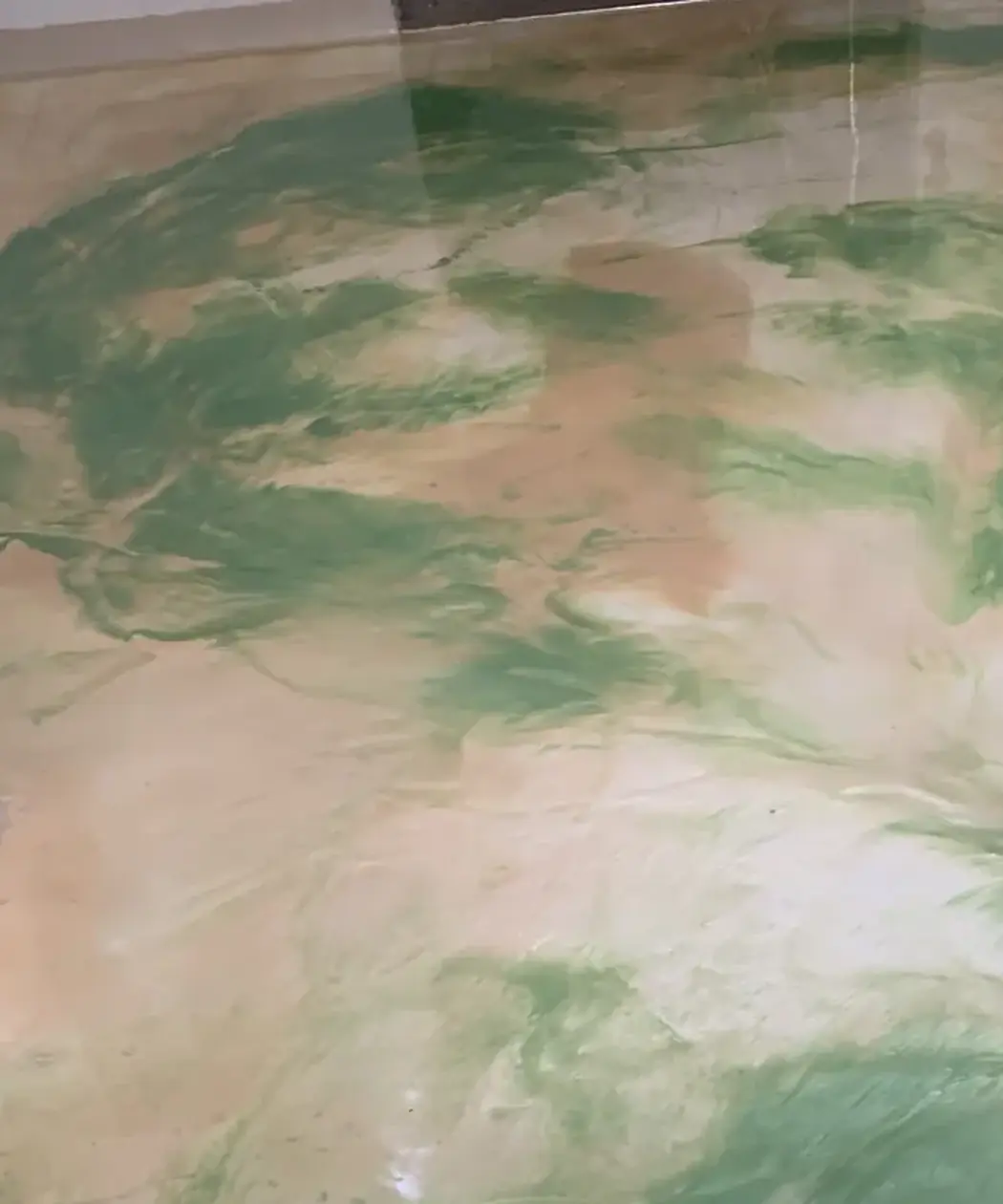
A metallic epoxy floor has no chips at all. Reflective pigment is mixed into clear epoxy and poured over a pigmented base. The wet resin is then worked so the color pools and veins like polished stone.
No two metallic floors come out the same. You choose the colors and the style, and the exact pattern forms during the pour. The surface is smooth and glossy, and most of the trade-offs trace back to that.
Which floor hides dirt and wear better?
Flake does. A mid-tone, multi-color blend breaks up the surface. Grit, tire marks, the nick from a dropped wrench and fine scratches all get lost in the pattern. Very light blends show grit and very dark blends show dust, so the middle hides the most.
A metallic floor works the other way. Gloss reflects light, so dust, footprints, tire marks and fine scratches stand out, most of all on a dark base. It looks its best clean, and it takes more sweeping to stay that way.
The slab under the floor matters too. A full broadcast covers every inch, so filled cracks and old stains disappear under the chip. Metallic color sits in clear resin, so it shows more of what is underneath. A filled joint that sits a little low can show as a line where the pigment collects.
That is why prep matters even more under a metallic floor. Either way, prep and the clear top coat decide how long the floor lasts.
In a working garage, flake keeps its looks longer because it hides the wear it takes. Repairs follow the same rule. Fresh chip blends into a random pattern, while a patch in a metallic swirl is hard to hide.
Which is less slippery in a Denver garage?
HomeGuide’s national cost guide says glossy epoxy floors can become slippery when wet. It also says epoxy flooring is naturally skid-resistant when dry. In a Denver garage, the floor is wet for much of the winter. Snow and slush come off the car and pool on the slab.
A full-broadcast flake floor has texture built in. The clear coat follows the chips, so the surface keeps a texture your shoes can grip. For ramps and entries, we can add anti-slip grit to the clear coat too.
A metallic floor is smooth by design, so it is slick when wet like any high-gloss floor. Where water gets tracked in, we can broadcast a fine anti-slip grit, such as aluminum oxide, into the clear coat. It stays subtle and keeps the depth of the look. In a garage that sees snowmelt every day, flake is still the easier floor to live with.
Where each floor fits best
Flake suits rooms that take a beating: garages, shops, mudrooms and laundry rooms. It also fits a basement used as a home gym or for storage. Among garage floor coatings, full-broadcast flake is what most Denver garages get. Sealing the slab keeps out the magnesium chloride that comes home in your tire treads all winter.
Metallic suits rooms where the floor is part of the design. Think finished basements, home bars, game rooms and show garages. Showrooms and salons use it the same way, as a floor customers notice.
Light matters with metallic. The gloss plays off windows and fixtures, which looks great in a walkout basement. In a room with hard afternoon glare, we look at the light on the walk-through before you commit.
Either system works as a basement floor coating. Below grade, the slab gets a moisture test before anything goes down. You can also split it: flake in the garage and metallic downstairs.
How each floor goes down
Prep looks the same for both. We diamond grind the slab, chase and fill cracks, patch spalls and treat oil before any coating goes on.
A flake floor then gets a primer and a base coat. While the base is wet, flake is thrown until it will not take any more. That is a full broadcast, also called a broadcast to rejection. The loose chip is scraped off, and the floor is sealed under the clear top coat.
A metallic floor turns into hand work once the base coat is down. Metallic pigment in clear epoxy goes over a base that is usually black, charcoal or white. Pours, rollers, blades and moving air push the pigment into veins and pools while the resin is wet. The pattern locks in as it cures, so the work has to happen inside that window.
That is skilled time, and on a metallic floor the hands doing the work are part of the product. On a metallic job, we mix test palettes with you so you see what your colors do. For flake, we bring samples so you choose off a real chip.
Top coats for Colorado sun and cold
Every metallic floor we install gets a polyaspartic top coat, and most of our garage floors get one as well. Straight epoxy ambers in sunlight, and Denver’s altitude means stronger UV than most of the country. On a metallic floor the color is the whole product, so yellowing shows badly. A light flake blend shows it too.
Cold is the other Colorado factor. Polyaspartic keeps curing at temperatures where epoxy has quit. So a flake floor in an unheated Front Range garage can go down in months when epoxy will not cure.
Metallic has less room in the cold. Its color is carried in an epoxy layer, and epoxy has a temperature floor. In a cold, unheated garage, the space may need heat before the pour goes down. Our look at epoxy and polyaspartic in Colorado explains why most Denver garages use both.
How do the two compare on cost?
Metallic costs more than flake. Of the garage systems we install, full-broadcast flake is the value pick and metallic is the most expensive. HomeGuide’s national cost guide says adding colored flakes or a metallic tint to an epoxy floor costs extra.
Most of the gap is the install. A flake broadcast is a repeatable method, while a metallic pattern is skilled hand work in wet resin. On either floor, slab condition is the other big lever.
Our guide to what a metallic floor costs in Denver has the published per-foot ranges for both finishes. For what moves a flake garage quote, read what a garage floor coating costs in Denver. Your own number comes from a free on-site walk-through and a written quote, and it holds unless the scope changes.
How to choose between flake and metallic
Pick flake if most of these describe your floor:
- It parks cars or takes snowmelt all winter.
- Tools, bikes or gym weights end up on it.
- You want it to look clean between sweeps.
- The slab has old patches or stains you would rather hide.
Pick metallic if most of these describe yours:
- The room is finished living space or a show space.
- The floor is meant to be seen.
- You do not mind sweeping a glossy floor more often.
- You want a pattern no other floor has.
Still torn? Plan for the room’s hardest day. A garage in February wants flake, and a basement bar wants metallic.
Denver Custom Coatings has been coating floors since 2008. On the free walk-through, we read the slab and recommend a system for how you use the room. The prep and the price go in writing, and we are open seven days a week.